Buy mediation-online.eu ?
We are moving the project
mediation-online.eu .
Are you interested in purchasing the domain
mediation-online.eu ?
domain@kv-gmbh.de · 0541-91531010
Buy mediation-online.eu ?
What is the difference between frequency modulation and amplitude modulation?
Frequency modulation (FM) and amplitude modulation (AM) are two different methods used in radio broadcasting to carry a signal. The main difference between the two is how they vary the carrier wave to transmit information. In AM, the amplitude of the carrier wave is varied in proportion to that of the input signal, while in FM, the frequency of the carrier wave is varied. FM is known for its better sound quality and resistance to noise, while AM is simpler and has a longer range. **
What is the difference between amplitude modulation and frequency modulation?
Amplitude modulation (AM) is a method of encoding information on a carrier wave by varying its amplitude, while frequency modulation (FM) encodes information by varying the frequency of the carrier wave. In AM, the amplitude of the carrier wave is directly proportional to the amplitude of the input signal, whereas in FM, the frequency of the carrier wave is varied in proportion to the amplitude of the input signal. FM is less susceptible to noise and interference compared to AM, making it a more reliable method for transmitting information over long distances. **


Similar search terms for Modulation
Top-Angebote
Products related to Modulation:
-
Uplift Essentials Virtual Motion Ocean Aquarium Lamp Virtual Motion Ocean Aquarium Lamp"Experience the tranquil beauty of the deep blue without the maintenance of a real tank with the Virtual Motion Ocean Aquarium Lamp. This creative decorative piece uses highdefinition ""moving picture"" technology to simulate a vibrant tropical reef,..."79,97 $*Shipping: 0,00 $Secure redirect to the provider
-
Uplift Essentials Serene Motion Virtual Aquarium Lamp Serene Motion Virtual Aquarium Lamp"Bring the soothing magic of the underwater world to your tabletop with the Serene Motion Virtual Aquarium Lamp. This highdefinition desktop aquarium decorative light uses advanced ""movingpicture"" technology to create a mesmerizing, continuous swim..."82,97 $*Shipping: 0,00 $Secure redirect to the provider
-
Tiny Tots Teens Trends Nostalgic Transparent Electronic Pets, Pixel Funny Virtual Cyber Digital Toy Keychain 11Bring back the charm of childhood with these Transparent Electronic Pets! Perfect for both kids and adults, this nostalgic virtual pet game brings fun pixel play and digital memories in a small, portable keychain size. With 168 pets to choose from,...23,97 $*Shipping: 0,00 $Secure redirect to the provider
-
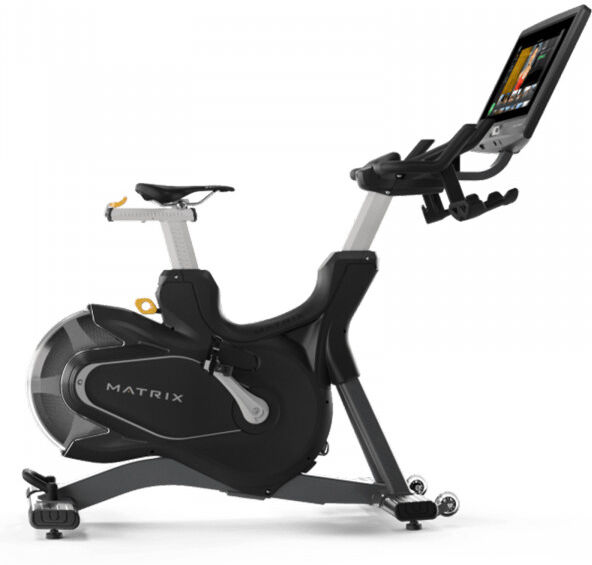
Matrix Virtual Training Cycle CXVTHE MATRIX VIRTUAL TRAINING CYCLE The Matrix Virtual Training Cycle is the purpose built bike for your cardio zone. Whether gym members are challenging themselves with exclusive workouts, enjoying streaming entertainment or taking on an immersive group class, the Virtual Training Cycle will...4794,00 £*Shipping: 0,00 £Secure redirect to the provider



-
How does modulation work?
Modulation is the process of varying a carrier signal's properties, such as its amplitude, frequency, or phase, in order to encode information onto it. This allows the carrier signal to carry the information over a communication channel. For example, in amplitude modulation (AM), the amplitude of the carrier signal is varied in accordance with the information signal. At the receiving end, the modulation is reversed through demodulation, allowing the original information to be recovered. Modulation is a fundamental concept in communication systems, allowing for the transmission of information over long distances. **
-
What is the meaning of digital PWM (Pulse Width Modulation)?
Digital PWM (Pulse Width Modulation) is a method used to control the amount of power delivered to a device by rapidly switching it on and off. The width of the on-time (duty cycle) determines the average power delivered to the device. In the digital context, PWM is achieved using digital signals and is commonly used in microcontrollers and digital signal processors to control the speed of motors, brightness of LEDs, and other applications requiring variable power control. This method allows for precise and efficient control of power delivery in digital systems. **
-
What are the characteristics of modulation?
Modulation is the process of varying a carrier signal's properties, such as amplitude, frequency, or phase, in order to transmit information. The characteristics of modulation include the ability to encode information onto a carrier signal, allowing for efficient transmission over long distances. Modulation also enables multiple signals to be transmitted simultaneously over the same medium, known as multiplexing. Additionally, modulation allows for the signal to be easily demodulated and the original information to be recovered at the receiving end. **
-
What is the project Pulse Width Modulation?
Pulse Width Modulation (PWM) is a technique used to encode a message into a pulsing signal. It involves varying the width of the pulse while keeping the frequency constant. This method is commonly used in electronic devices to control the power supplied to electrical devices, such as motors, LEDs, and speakers. By adjusting the duty cycle of the pulse, PWM allows for precise control over the output voltage or current, making it an efficient way to regulate the speed or intensity of various components. **


What is the exact difference between source coding and channel coding in digital modulation?
Source coding and channel coding are two different processes in digital modulation. Source coding is the process of compressing the data to reduce the amount of information that needs to be transmitted. It aims to remove redundancy and irrelevant information from the source data. On the other hand, channel coding is the process of adding redundancy to the data before transmission in order to make it more resilient to errors that may occur during transmission. It aims to protect the data from noise and interference in the communication channel. In summary, source coding reduces the amount of data to be transmitted, while channel coding adds redundancy to protect the data during transmission. **
How does the modulation transfer function typically proceed?
The modulation transfer function (MTF) typically proceeds by measuring the ability of an optical system to transfer contrast from the object to the image. This is done by analyzing the spatial frequency response of the system, which describes how well the system can reproduce different levels of detail in the object. The MTF is often measured by imaging a test pattern with known spatial frequencies and analyzing the contrast of the resulting image. The MTF is then plotted as a function of spatial frequency, showing how contrast is transferred at different levels of detail. **
Top-Angebote
Products related to Modulation:
-
Inspired Deals Precision Digital Thickness Gauge 025.4mm With 0.01mm Resolution Precision Digital Thickness Gauge 025.4mm With 0.01mm ResolutionGet dependable measurements in seconds and take the guesswork out of material selection and quality checks. This digital thickness gauge measures from 025.4mm with 0.01mm resolution and approximately 0.02mm tolerance for consistent everyday...64,97 $*Shipping: 0,00 $Secure redirect to the provider
-
Inspired Deals Disney Bitzee Digital Pet Carrying Case, Hard Shell Storage Organizer For Interactive Virtual Pets Travel Safe Disney Bitzee Digital Pet Carrying Case, Hard Shell Storage Organizer For Interactive Virtual Pets Travel SafeFall in love with keeping your childs favorite digital companion safe and ready for every adventure. This digital pet storage case is thoughtfully designed for Bitzee and similar interactive toys, giving parents peace of mind and kids the freedom to...39,97 $*Shipping: 0,00 $Secure redirect to the provider
-
Uplift Essentials Virtual Motion Ocean Aquarium Lamp Virtual Motion Ocean Aquarium Lamp"Experience the tranquil beauty of the deep blue without the maintenance of a real tank with the Virtual Motion Ocean Aquarium Lamp. This creative decorative piece uses highdefinition ""moving picture"" technology to simulate a vibrant tropical reef,..."79,97 $*Shipping: 0,00 $Secure redirect to the provider
-
Uplift Essentials Serene Motion Virtual Aquarium Lamp Serene Motion Virtual Aquarium Lamp"Bring the soothing magic of the underwater world to your tabletop with the Serene Motion Virtual Aquarium Lamp. This highdefinition desktop aquarium decorative light uses advanced ""movingpicture"" technology to create a mesmerizing, continuous swim..."82,97 $*Shipping: 0,00 $Secure redirect to the provider
-
What is the difference between frequency modulation and amplitude modulation?
Frequency modulation (FM) and amplitude modulation (AM) are two different methods used in radio broadcasting to carry a signal. The main difference between the two is how they vary the carrier wave to transmit information. In AM, the amplitude of the carrier wave is varied in proportion to that of the input signal, while in FM, the frequency of the carrier wave is varied. FM is known for its better sound quality and resistance to noise, while AM is simpler and has a longer range. **
-
What is the difference between amplitude modulation and frequency modulation?
Amplitude modulation (AM) is a method of encoding information on a carrier wave by varying its amplitude, while frequency modulation (FM) encodes information by varying the frequency of the carrier wave. In AM, the amplitude of the carrier wave is directly proportional to the amplitude of the input signal, whereas in FM, the frequency of the carrier wave is varied in proportion to the amplitude of the input signal. FM is less susceptible to noise and interference compared to AM, making it a more reliable method for transmitting information over long distances. **
-
How does modulation work?
Modulation is the process of varying a carrier signal's properties, such as its amplitude, frequency, or phase, in order to encode information onto it. This allows the carrier signal to carry the information over a communication channel. For example, in amplitude modulation (AM), the amplitude of the carrier signal is varied in accordance with the information signal. At the receiving end, the modulation is reversed through demodulation, allowing the original information to be recovered. Modulation is a fundamental concept in communication systems, allowing for the transmission of information over long distances. **
-
What is the meaning of digital PWM (Pulse Width Modulation)?
Digital PWM (Pulse Width Modulation) is a method used to control the amount of power delivered to a device by rapidly switching it on and off. The width of the on-time (duty cycle) determines the average power delivered to the device. In the digital context, PWM is achieved using digital signals and is commonly used in microcontrollers and digital signal processors to control the speed of motors, brightness of LEDs, and other applications requiring variable power control. This method allows for precise and efficient control of power delivery in digital systems. **
Similar search terms for Modulation
-
Tiny Tots Teens Trends Nostalgic Transparent Electronic Pets, Pixel Funny Virtual Cyber Digital Toy Keychain 11Bring back the charm of childhood with these Transparent Electronic Pets! Perfect for both kids and adults, this nostalgic virtual pet game brings fun pixel play and digital memories in a small, portable keychain size. With 168 pets to choose from,...23,97 $*Shipping: 0,00 $Secure redirect to the provider
-
Matrix Virtual Training Cycle CXVTHE MATRIX VIRTUAL TRAINING CYCLE The Matrix Virtual Training Cycle is the purpose built bike for your cardio zone. Whether gym members are challenging themselves with exclusive workouts, enjoying streaming entertainment or taking on an immersive group class, the Virtual Training Cycle will...4794,00 £*Shipping: 0,00 £Secure redirect to the provider
-
Inspire Select High Accuracy Digital PH Water Quality Tester 0.01 Resolution LCD Meter With Auto Calibration For Aquarium Pool Spa sky BlueKnow your water conditions in seconds and take the uncertainty out of everyday testing. This compact handheld tester provides fast, precise readings through a clear LCD display without the hassle of color charts or disposable strips. Designed for...41,95 $*Shipping: 0,00 $Secure redirect to the provider
-
Axis Y New Skin Resolution Gel Mask 100 mlHealth and Beauty Masks AXIS-Y New Skin Resolution Gel Mask 100 ml What is New Skin Resolution Gel Mask 100ml? AXIS-Y's New Skin Resolution is a soothing gel mask, now marketed by the brand as the Heartleaf Skin Soothing Gel Mask. It's designed to refresh and soothe skin stressed by heat, environmental factors, and everyday irritations. Benefits Its elastic gel texture spreads easily and provides an immediate cooling sensation , without leaving a heavy or sticky residue. Heartleaf (Houttuynia cordata) soothes sensitive or stressed skin, niacinamide improves the appearance of uneven and dull skin tone, centella asiatica provides comfort, artemisia helps calm exposed skin, and allantoin, along with yam root, maintains hydration and softness. AXIS-Y declares it vegan . Suitable for sensitive or reactive skin. Who is it for? For sensitive, reactive or heat-reddened skin, and for anyone who wants a moment of calm and freshness after a long day, whether in the sun or in the city. How to apply New Skin Resolution Gel Mask 100ml? With clean, dry skin, spread an even layer over the face, avoiding eyes and lips. Leave on for 10-15 minutes . Rinse with warm water and continue with your usual routine. Product Use It's a great remedy after sun exposure, a trip, or a day in heated or air-conditioned environments. Keep it in the refrigerator for a few minutes beforehand if you want to enhance the cooling effect.12,48 £*Shipping: 3,99 £Secure redirect to the provider
-
What are the characteristics of modulation?
Modulation is the process of varying a carrier signal's properties, such as amplitude, frequency, or phase, in order to transmit information. The characteristics of modulation include the ability to encode information onto a carrier signal, allowing for efficient transmission over long distances. Modulation also enables multiple signals to be transmitted simultaneously over the same medium, known as multiplexing. Additionally, modulation allows for the signal to be easily demodulated and the original information to be recovered at the receiving end. **
-
What is the project Pulse Width Modulation?
Pulse Width Modulation (PWM) is a technique used to encode a message into a pulsing signal. It involves varying the width of the pulse while keeping the frequency constant. This method is commonly used in electronic devices to control the power supplied to electrical devices, such as motors, LEDs, and speakers. By adjusting the duty cycle of the pulse, PWM allows for precise control over the output voltage or current, making it an efficient way to regulate the speed or intensity of various components. **
-
What is the exact difference between source coding and channel coding in digital modulation?
Source coding and channel coding are two different processes in digital modulation. Source coding is the process of compressing the data to reduce the amount of information that needs to be transmitted. It aims to remove redundancy and irrelevant information from the source data. On the other hand, channel coding is the process of adding redundancy to the data before transmission in order to make it more resilient to errors that may occur during transmission. It aims to protect the data from noise and interference in the communication channel. In summary, source coding reduces the amount of data to be transmitted, while channel coding adds redundancy to protect the data during transmission. **
-
How does the modulation transfer function typically proceed?
The modulation transfer function (MTF) typically proceeds by measuring the ability of an optical system to transfer contrast from the object to the image. This is done by analyzing the spatial frequency response of the system, which describes how well the system can reproduce different levels of detail in the object. The MTF is often measured by imaging a test pattern with known spatial frequencies and analyzing the contrast of the resulting image. The MTF is then plotted as a function of spatial frequency, showing how contrast is transferred at different levels of detail. **
* All prices are inclusive of VAT and, if applicable, plus shipping costs. The offer information is based on the details provided by the respective shop and is updated through automated processes. Real-time updates do not occur, so deviations can occur in individual cases. ** Note: Parts of this content were created by AI.